


Picking an orthodontist isn’t like choosing a coffee shop. This is the person who will guide your smile for months, sometimes years. The right specialist can transform not just how your teeth look, but how you bite, chew, and feel about your reflection.
So how do you know who to trust? This guide walks you through everything worth considering, from credentials and technology to red flags and cost benchmarks. You’ll leave knowing exactly what to look for, what to ask, and what to avoid.
Here’s a preview of what we’ll cover:
- The real difference between orthodontists, dentists, and mail-order aligners
- How to verify board certification in minutes
- Questions to ask at your free consult
- Warning signs of a subpar practice
- Payment and financing options to ask about

Why Choosing the Right Orthodontist Matters
Orthodontic treatment shapes more than your smile. It affects how your jaw functions, how you chew your food, and even how you speak. When the alignment is right, everything works together. When it’s off, small issues can turn into lifelong headaches (sometimes literally).
Most treatment plans run 12 to 24 months. That’s a long time to spend with someone who doesn’t feel like the right fit. You want a specialist who listens, explains, and truly understands your goals.
There’s also a big difference between specialty expertise and general dental care. Orthodontists spend years focused on tooth movement, jaw growth, and bite correction. That focus shows up in your transformations.
Orthodontist vs. General Dentist vs. DTC Aligners
All orthodontists are dentists, but not all dentists are orthodontists. After dental school, orthodontists complete two to three additional years of full-time specialty residency. That training focuses entirely on moving teeth and aligning jaws.
General dentists can offer aligners, and many do. However, they typically don’t have the same depth of training in biomechanics or complex bite correction. For simple cases, this may be fine. For anything more involved, specialty expertise makes a real difference.
Direct-to-consumer (DTC) mail-order aligners take a different approach. You skip the in-person exam. No X-rays, no hands-on evaluation, and often no direct doctor oversight. The American Association of Orthodontists has raised concerns about safety and outcomes with this model.
| Feature | Orthodontist | General Dentist | DTC Mail-Order Aligners |
|---|---|---|---|
| Specialty training | 2-3 years post-dental school | None required | None |
| In-person exam | Yes | Yes | Usually no |
| X-rays and records | Standard | Standard | Rarely |
| Ongoing oversight | Direct, in-office | Direct, in-office | Remote or minimal |
| Complex case ability | Full range | Limited | Very limited |
| Emergency support | Yes | Yes | Limited |
Verify Credentials and Board Certification
A few quick checks can tell you a lot about a provider’s qualifications.
- AAO membership. Only orthodontic specialists qualify. Use the AAO Find-an-Orthodontist tool to confirm.
- ABO diplomate status. Board certification through the American Board of Orthodontics is voluntary and shows extra dedication. Diplomates prove their skills through ongoing case review.
- State dental license. Every state board publishes license status and any disciplinary history online. A two-minute search is worth the peace of mind.
- Continuing education. Ask what courses, conferences, or new techniques the doctor has completed recently. Great specialists never stop learning.
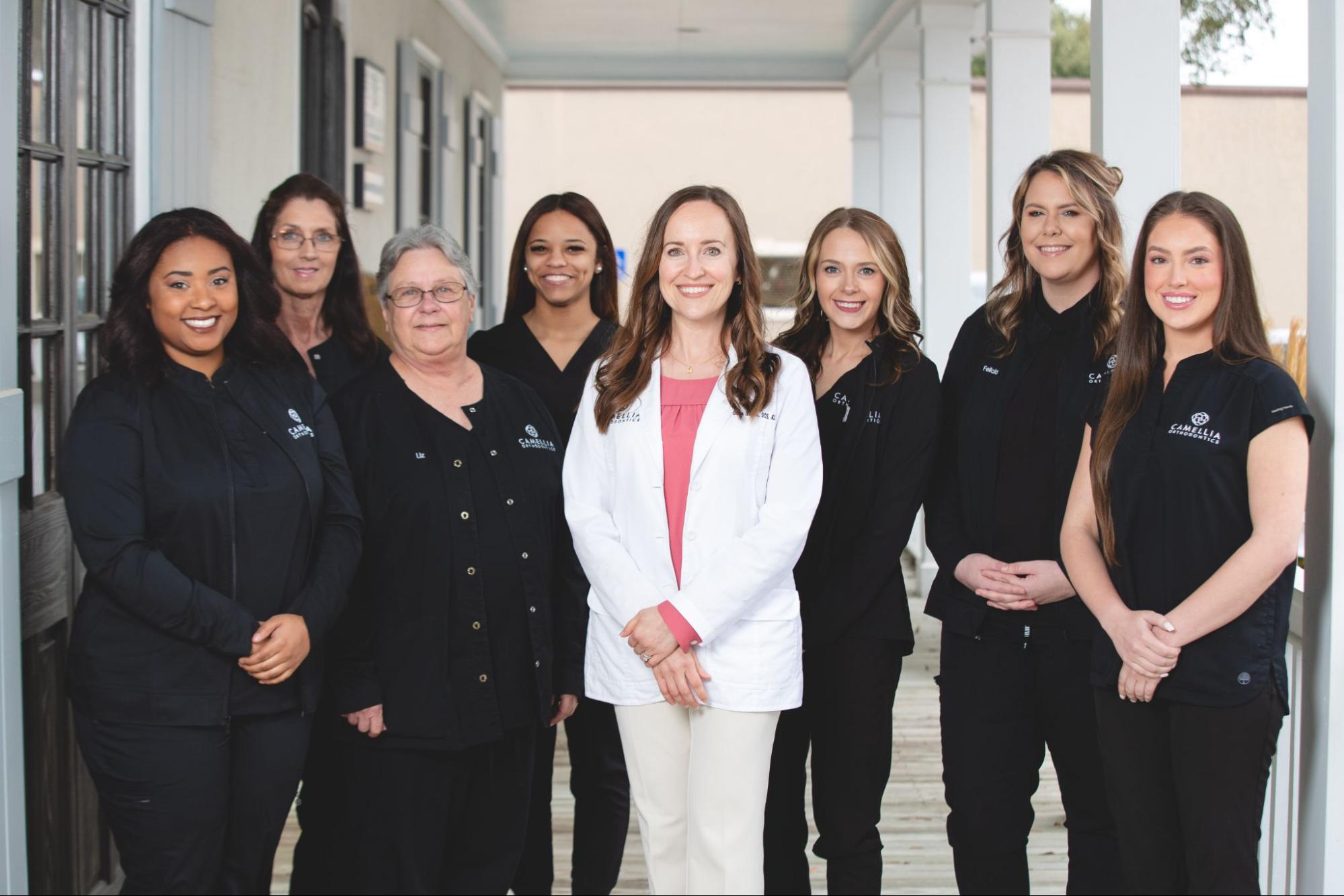
At Camellia Orthodontics, Dr. Diana Bozner is a board-certified orthodontist and third-generation dentist. Creating beautiful smiles is a part of her DNA, and her ABO credentials reflect years of dedicated study.
Evaluate Treatment Options Offered
A quality practice offers more than one solution because no two smiles are the same. Look for a range of options like these:
- Modern metal braces for reliable, efficient correction of nearly any case
- Clear braces that blend in for adults and image-conscious teens
- Invisalign clear aligners for a nearly invisible option with removable trays
- Lingual or accelerated systems for specific lifestyle or timeline needs
- Phase I orthodontics for kids whose bites are still developing
Age matters too. A practice comfortable treating children, teens, and adults can meet your family where you are. The American Association of Orthodontics recommends a first orthodontic check-up by age seven, even if treatment isn’t needed yet.
Look at Technology and Diagnostic Tools
Modern tools lead to better diagnoses, more accurate treatment plans, and often shorter treatment times. Here’s what to look for during a tour or free consult:
- 3D imaging and digital X-rays for lower radiation and sharper detail
- Intraoral digital scanners (like iTero) that replace goopy impressions
- Computer-aided treatment planning to map every tooth movement before treatment starts
- Remote monitoring apps so you can check in from home between visits
Technology alone doesn’t make a great orthodontist. But when a practice invests in digital scans, digital photos, and modern planning tools, it usually reflects a broader commitment to quality.
What to Expect at Your Consultation
A good first visit sets the tone for everything that follows. Here’s what a thorough consultation should include:
- A complete exam with photos, X-rays, and digital scans
- A clear, understandable diagnosis of what’s happening in your mouth
- A personalized treatment plan tailored to your goals and lifestyle
- A discussion of options, timing, and total cost
- Time to ask questions without feeling rushed
Pay attention to how the team communicates. Do they explain things clearly? Do they answer your questions or brush them off? Do you feel like a person or a number? A boutique office experience often means more one-on-one time with the specialist.
Essential Questions to Ask Your Orthodontist
Bring this checklist to every consultation. The answers reveal a lot about the practice’s approach.
- Are you an AAO member and board-certified through the ABO?
- What treatment options do you recommend for my case, and why?
- How long will my treatment take, and how often will I visit?
- What’s the total cost, and what payment or financing options do you offer?
- Who oversees my care day to day: the orthodontist or the assistants?
- What happens if I have an emergency between visits?
- What retention plan will I follow after treatment?
- Can I see before-and-after photos of cases similar to mine?
Red Flags and Warning Signs to Avoid
Most orthodontic practices are excellent. A few are not. Watch out for these signals:
- High-pressure sales tactics that push you to sign a contract on the spot
- No diagnostic records taken before a treatment recommendation
- Vague, one-size-fits-all plans that don’t address your specific bite
- Unclear or shifting fees with hidden charges added later
- Unusually low prices that seem too good to be true (they usually are)
- Assistants doing most of the clinical work without doctor oversight
- Rushed visits with no time for questions
Trust your instincts. If something feels off during the free consult, it probably is.
Understanding Insurance and Financing Options
Orthodontic care is an investment, and understanding your payment options upfront helps you plan. Ask any practice you’re considering for a full written estimate before committing, so you know exactly what’s included.
Common ways to pay:
- Dental insurance with an orthodontic rider (often covers a portion up to a lifetime maximum)
- In-house monthly payment plans, often with no interest
- Third-party financing through providers like CareCredit
- HSA or FSA funds, which are typically eligible for orthodontic care
Camellia Orthodontics offers financing and insurance options designed to make treatment accessible for Lafayette and Opelousas families.
Location, Hours, and Communication
You’ll visit your orthodontist every four to eight weeks during active treatment. Convenience matters more than you’d think. Consider:
- Proximity to your home, work, or your child’s school
- Extended or weekend hours if you work a traditional schedule
- Emergency support for broken brackets or lost aligners
- Response time when you call, text, or email
A practice with two locations, clear communication channels, and a responsive team makes the whole experience smoother.
Review Patient Testimonials and Before/After Photos
Real results and real reviews tell you more than any brochure. Here’s how to evaluate them:
- Check multiple review platforms like Google, Facebook, and Healthgrades
- Look for detailed reviews that mention specific team members or experiences
- Ask to see before-and-after cases similar to yours in complexity
- Watch video testimonials to hear real patients describe their experience
- Ask friends, family, or your dentist for personal recommendations
Before-and-after photos should show a range of cases, not just the easy ones. If a practice only shows minor corrections, ask about more involved transformations.
Retention and Long-Term Follow-Up Care
Great orthodontic work doesn’t end when the braces come off. Retention keeps your smile in place for the long haul.
Ask about:
- Retainer types, such as clear, Hawley, or bonded options
- Wear schedule for the first year and beyond
- Follow-up visits to check retention and make adjustments
- Long-term monitoring programs that check in years after treatment
A practice that plans for retention from day one is one that cares about your results for life.
Frequently Asked Questions
How can I tell if an orthodontist is good?
Look for board certification through the American Board of Orthodontics, active AAO membership, and specialty training beyond dental school. Read reviews, view before-and-after photos, and pay attention to how the doctor communicates during your free consult. A great orthodontist takes full records, explains your diagnosis clearly, and creates a truly customized experience.
Does it matter which orthodontist I go to?
Yes, it matters a great deal. Orthodontists vary in training, technology, treatment styles, and communication. A board-certified specialist with advanced tools and a personalized approach delivers different results than a general provider using outdated methods. Since treatment lasts many months, choosing someone you trust and connect with makes the whole experience better.
Should I get a second opinion?
Second opinions are common and encouraged, especially for complex cases or when treatment recommendations feel unclear. Meeting with two or three orthodontists helps you compare diagnoses, treatment styles, and costs. Most practices offer free consults, so there’s little downside to gathering more information before committing to a long treatment plan.
Take the Next Step Toward Your Best Smile
Choosing the right orthodontist comes down to a few key things: verified credentials, modern technology, clear communication, honest pricing, and a team that treats you like family. Take your time, ask questions, and visit more than one office if you’re unsure. Your smile is worth the effort.
If you’re in the Lafayette or Opelousas area, come meet Dr. Diana Bozner and our friendly team at Camellia Orthodontics, where your best smile blooms. Come enjoy the difference of a truly customized experience, where modern amenities meet southern hospitality. Your smile awaits. Schedule your free consult today and see what world-class service with a hometown feel really means. Are you ready to let it bloom?